
“AI is a mirror of humanity; if we don’t like what we see we have to change ourselves not the AI”. Joanna Bryson
Technology has become an integral part of a student’s life. From attending classes to presenting assignments and using intelligence (AI) students are engaging with digital tools in various ways every day. Knowing how to use a smartphone, computer or tablet is not enough. Students also need to know how to use technology creatively and responsibly.
Given AI online learning and digital workplaces are increasing developing skills can help students excel in school communicate confidently explore interests and prepare for the careers. These skills are becoming more and more essential for success.
Microsoft CEO Satya Nadella has described AI as the "Defining technology of our time" which makes it important for students to learn not how to use new technology but also how to use it wisely and responsibly.
What are Digital Skills?
Digital skills are the skills needed to be able to use devices, apps and online platforms. For students’ digital skills go beyond being able to type a document send a message or search Google.
Digital competence is being able to locate the information communicate professionally protect personal data collaborate online and utilise digital tools to solve and share ideas.
In nut and shell, digital literacy is not about understanding how technology works but also about knowing how to use it properly.
The inventor of the World Wide Web Tim Berners-Lee has often spoken about how the Web has the potential to be accessible to everyone and how he has advocated for this vision with the words "This is for everyone".
Why do students need skills in 2026?
The way students learn and work is changing quickly. Digital tools are now being used in classrooms, colleges, internships and in the workplace.
Students can require skills in order to:
• Prepare assignments and presentations
• Attend online classes and meetings
• Research information for projects
• Work on group tasks using cloud-based tools
• Communicate through emails and other digital platforms
• Use AI tools responsibly
• Create digital portfolios and presentations
• Stay safe from online dangers
Students who learn these digital skills early at school will have more confidence when they transition into higher education and the working world.
Technology should enhance learning, not replace it. It will help students to learn deeply think more independently and express their ideas more effectively.
What skills should students learn in 2026?
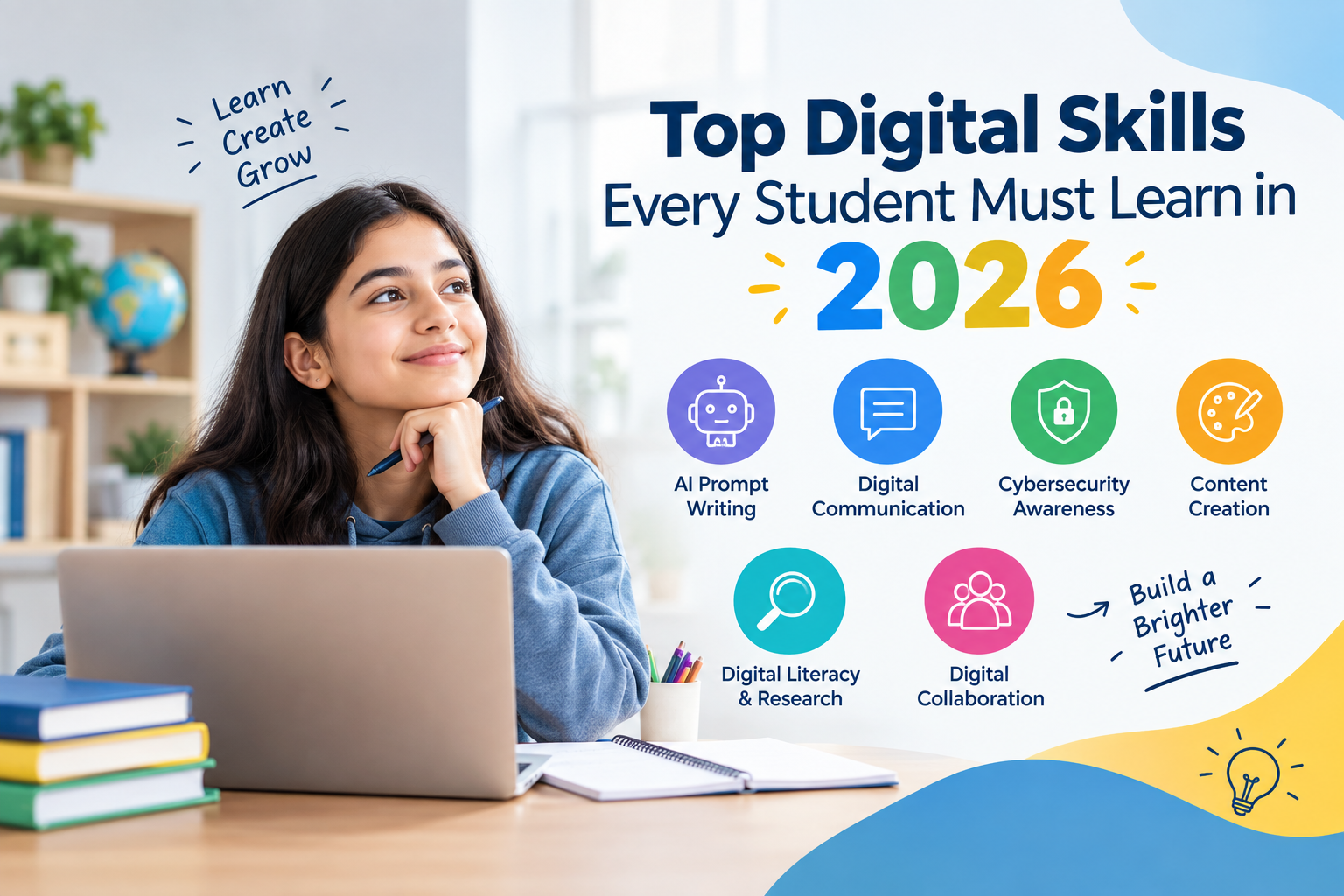
1. AI Prompt Writing
Artificial intelligence is becoming a tool for learning and productivity. Getting results from AI heavily depends on how we communicate with it.
AI Prompt Writing is about being able to provide detailed instructions to an AI tool in order to get the desired result.
For instance of asking an AI tool to "write about climate change" a student could say:
"Write a short essay for Grade 7 students 300 words long explaining the causes and effects of climate change in simple language with real-life examples."
A clear prompt will help us get a result from the AI tool. Students who learn how to write prompts will be able to:
Organise their thoughts
• Get helpful suggestions
• Improve rough drafts
• Understand difficult topics
• Save time on tasks
• Explore different ways to solve a problem
Students should however keep in mind that AI is not a replacement for their own thinking. They must ensure that they are factually correct use their judgment and adhere to any academic integrity rules.
The real skill is not simply knowing how to ask AI a question but knowing what to ask, how to evaluate the answer and how to use the information responsibly.
2. Digital Communication
Good communication is important both online and offline. Students are likely to use emails, messaging tools, video calls and learning platforms.
Digital Communication means understanding how to:
• Write polite emails
• Speak confidently during online meetings
• Use formal language when required
• Follow online etiquette
• Share files and information correctly
• Listen and reply respectfully in virtual discussions
Students who develop these habits early will be well prepared for college applications, internships and working in the professional world later.
The digital world is where communication no just about sending a message it is about being clear, respectful and responsible in how we communicate.
3. Cybersecurity Awareness
The internet has brought us many opportunities but it has also brought some dangers. Students should know about the basics of cybersecurity to be able to use tools safely.
Some important habits include:
• Creating unique and memorable passwords
• Keeping passwords secret
• Being careful with links or messages
• Spotting phishing attempts
• Avoiding sharing of personal information online
• Checking whether a website or source is trustworthy
• Updating devices and software regularly
Cybersecurity awareness is not just for technology experts. Every person who uses the internet needs to know how to stay safe.
A skilled student should therefore understand that being smart online also means being safe online.
4. Content Creation
Students are not just consumers of content but they can also be creators.
Content creation can involve writing, graphic design, video editing, photography, presentations, podcasts and other forms of expression.
These skills allow students to express their ideas creatively. A school project could be turned into a video, podcast, infographic or digital presentation.
Content creation helps students to develop:
• Creativity
• Communication
• Planning
• Problem-solving
• Presentation skills
• Confidence
Over time students can create a portfolio that showcases their skills and achievements.
5. Digital Literacy and Research
The internet has a lot of information but not all of it is true or reliable. That is why it is important for students to know about literacy skills.
Students should learn how to:
• Search for information
• Compare information from different sources
• Identify the trustworthiness of a website or author
• Tell facts from opinions
• Check the date and context of information
• Verify facts before using them in schoolwork
These skills enable students to be learners. Of simply trusting the first answer they see they learn to question, compare and think critically.
This is especially important in the age of AI, where information can be generated quickly. Students need to develop the habit of asking: Is this information correct? What is the source? Can I verify it?
6. Digital Collaboration
Collaboration in the world often involves people working together remotely to complete a task. Students can learn this skill through group activities and classroom projects.
Digital collaboration means working using shared documents, online presentations, video calls and team platforms.
Students learn how to:
• Divide tasks
• Share ideas
• Give and receive feedback
• Edit files together
• Communicate with team members
• Complete a project as a team
These experiences will prepare students for teamwork in college and in their future careers. The digital world has also shown us that collaboration does not necessarily require being in the room. Technology can help people come together to learn, create and solve problems as a team.
How can students develop skills without spending a lot of money?
Learning skills does not always mean paying for expensive courses or buying new gadgets. Students can start with the resources they already have. They can adopt the following ways to start:
1. Use Learning Resources
There are plenty of tutorials, courses and educational videos that're available online. Students can choose topics based on their interests and needs.
2. Learn through School Projects
Assignments and class projects are a way to practice researching, presenting, content creation and collaboration.
3. Practise Regularly
Digital skills improve with practice. Of trying to learn everything at once students can spend a little time experimenting with new tools regularly.
4. Work on Personal Projects
Making a presentation designing a poster editing an educational video or maintaining a digital portfolio can be a great hands-on experience.
5. Learn from Mistakes
Technology can sometimes feel confusing. Students should not be afraid of experimenting, asking questions or learning from their mistakes.
6. Use Technology Responsibly
The goal is not just to use as digital tools as possible. The goal is to be able to choose the tool know when to use it and use it responsibly and ethically.
As Tim Berners-Lee has pointed out the Web has the potential to empower people to learn create and realise their potential. Technology is truly valuable when people use it to help themselves and others.
How can IPS school help students develop ready digital skills?
Digital skills are no longer optional they are a part of learning, communication, creativity and career development. Skills such as AI Prompt Writing, Digital Communication, cybersecurity awareness, content creation, digital literacy and digital collaboration can help students to become responsible digital users.
Schools have a vital role to play in this regard. At Indirapuram Public School, Pratap Vihar students are encouraged to use technology not for fun but as a tool, for learning, creativity, communication and problem-solving. Moreover, the school is providing Robotic Lab for the students to develop their skill.
Technology-enabled learning, projects, research and collaboration can provide students with opportunities to develop these skills in an educational setting.
The role of education is not just to teach students how to use the technology but also how to know when to use it and how to use it.
The Future Belongs to Responsible Digital Learners
The future will not belong simply to students who know how to use technology. It will belong to those who know how to use technology creatively, intelligently and responsibly.
AI and other digital tools will continue to change the way we study and work. But curiosity, critical thinking, creativity, communication and good judgement will remain equally important.
It is necessary for the students to adopt these skills and develop themselves for the new era of the technology. By it, the students will be able to prepare themselves to face the challenges as well as opportunities of the future. Technology can provide the tools, but it is the student’s knowledge, creativity and responsible thinking that give those tools real value.
यन्त्रबुद्धिः सचेतैव तथैव च विनिर्णये।
व्याकरणस्य नियन्त्रणाद् भाषते ज्ञानमद्भुतम् ॥
("The machine-intellect (AI) acts as if it is conscious in its decision-making, and through the strict governance of grammar/rules, it speaks wonderful knowledge.")