

विद्या ददाति विनयं विनयाद् याति पात्रताम्।
पात्रत्वाद् धनमाप्नोति धनाद्धर्मं ततः सुखम्॥
Knowledge gives humility; humility leads to worthiness; worthiness brings prosperity, and prosperity leads to a meaningful and happy life.
Introduction:
Education is a continuous process. It cannot be achieved merely through rote learning. To ensure the holistic development of an individual, it is essential to learn, understand, and apply knowledge in real life. And this process keeps changing with time. Education has taken a completely different form in today’s era. It is no longer just about memorising lessons and learning things by heart. Today, education is more about understanding, thinking, learning new skills, and applying knowledge in real life. Education is not limited to simply answering questions. This is something we all need to understand today. The time when students simply memorised questions and answers and wrote whatever they remembered is gone. In today’s age of science and technology, we need to move towards analytical learning, where students learn to think, understand, analyse, and apply their knowledge rather than just memorising information.
As Albert Einstein is often quoted as saying, “Education is not the learning of facts, but the training of the mind to think.” This idea is becoming increasingly important in today's classrooms.
What Is Rote Learning?
Rote learning simply means learning something by heart through repetition. For example, a child may memorise a definition, a poem, a formula or an answer and write it in the examination.There is nothing wrong with memorising some things. Students need to remember multiplication tables, vocabulary, formulas, basic rules and important facts. These things make further learning easier.
The problem starts when students only memorise answers without understanding them. For example, a child may remember the formula for finding the area of a rectangle. But if the child does not understand where or how to use the formula, the learning remains incomplete.
What Is Critical Thinking?
Critical thinking means thinking carefully before accepting something as true. It involves asking questions, looking at different possibilities, finding reasons and making decisions based on understanding.
For example, instead of simply learning that plants need sunlight, a teacher can ask: “What do you think will happen if a plant does not get sunlight for several days? Why?” Now the child has to think, give a reason and perhaps even suggest an experiment. In the same way, in English, instead of simply asking students to remember the qualities of a character, a teacher can ask, “Do you agree with the character's decision? What would you have done in the same situation?” Such questions make students think beyond the textbook develop critical thinking and problem-solving skills.
Psychologist Jean Piaget believed that children learn by actively exploring and making sense of the world around them. This reminds us that children should not only be told the answers; they should also get opportunities to discover and understand things themselves.
Critical Thinking Vs Rote Learning: Key Differences
Below are the key differences between critical thinking and rote learning.
|
Rote Learning |
Critical Thinking |
|
Learn and remember information |
Understand and think about information |
|
Focuses on finding the expected answer |
Allows students to explore different answers |
|
Mostly depends on repetition |
Depends on reasoning and understanding |
|
Useful for remembering basic facts |
Useful for solving new problems |
|
Less scope for creativity |
Encourages new ideas |
|
Knowledge may remain limited to the textbook |
Connects learning with everyday life |
However, we should not think that rote learning is completely bad. Students need to remember basic information before they can use it. The real aim should be to balance memorisation with understanding and application. The shift towards competency-based learning reflects this changing approach, where students are encouraged to understand concepts, apply knowledge and develop analytical and critical-thinking skills.
Why Critical Thinking Is Important for Students?
Critical thinking is useful not only in school but also in everyday life. It helps children look at a situation carefully instead of accepting everything they hear or read. It teaches them to pause, think, ask questions and then make a decision. The following points can help us to understand its importance:
• Helps in Making Better Decisions
• Builds Confidence
• Encourages Creativity
• Improves Communication
• Prepares Them for Future Careers
Psychologist Benjamin Bloom placed remembering at the basic level of learning and then included skills such as understanding, applying, analysing, evaluating and creating. In simple words, remembering is important, but it should not be the final goal of learning. Students should gradually move from knowing information to understanding it and using it in meaningful ways.
How Schools Can Develop Critical Thinking Skills?
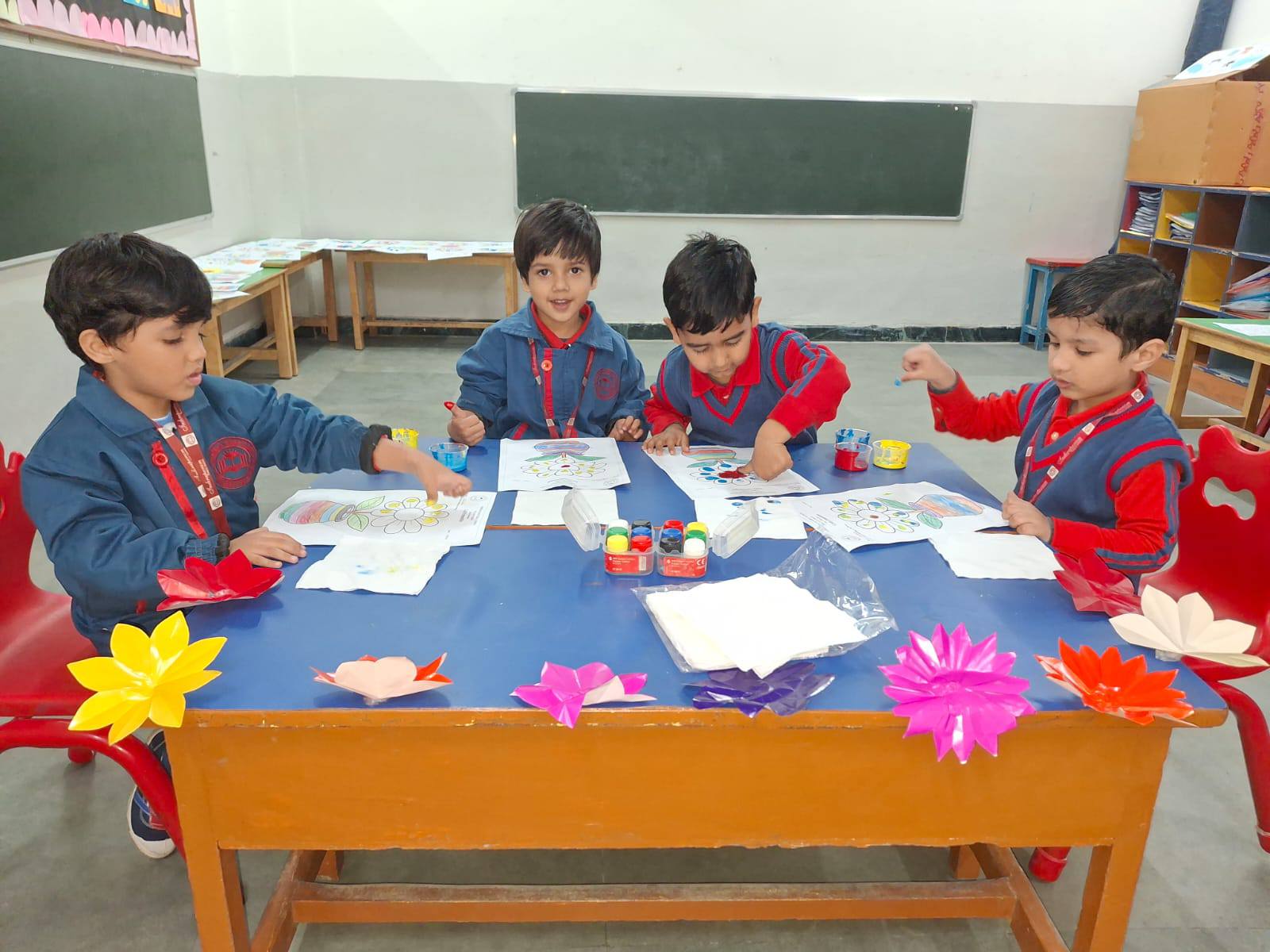
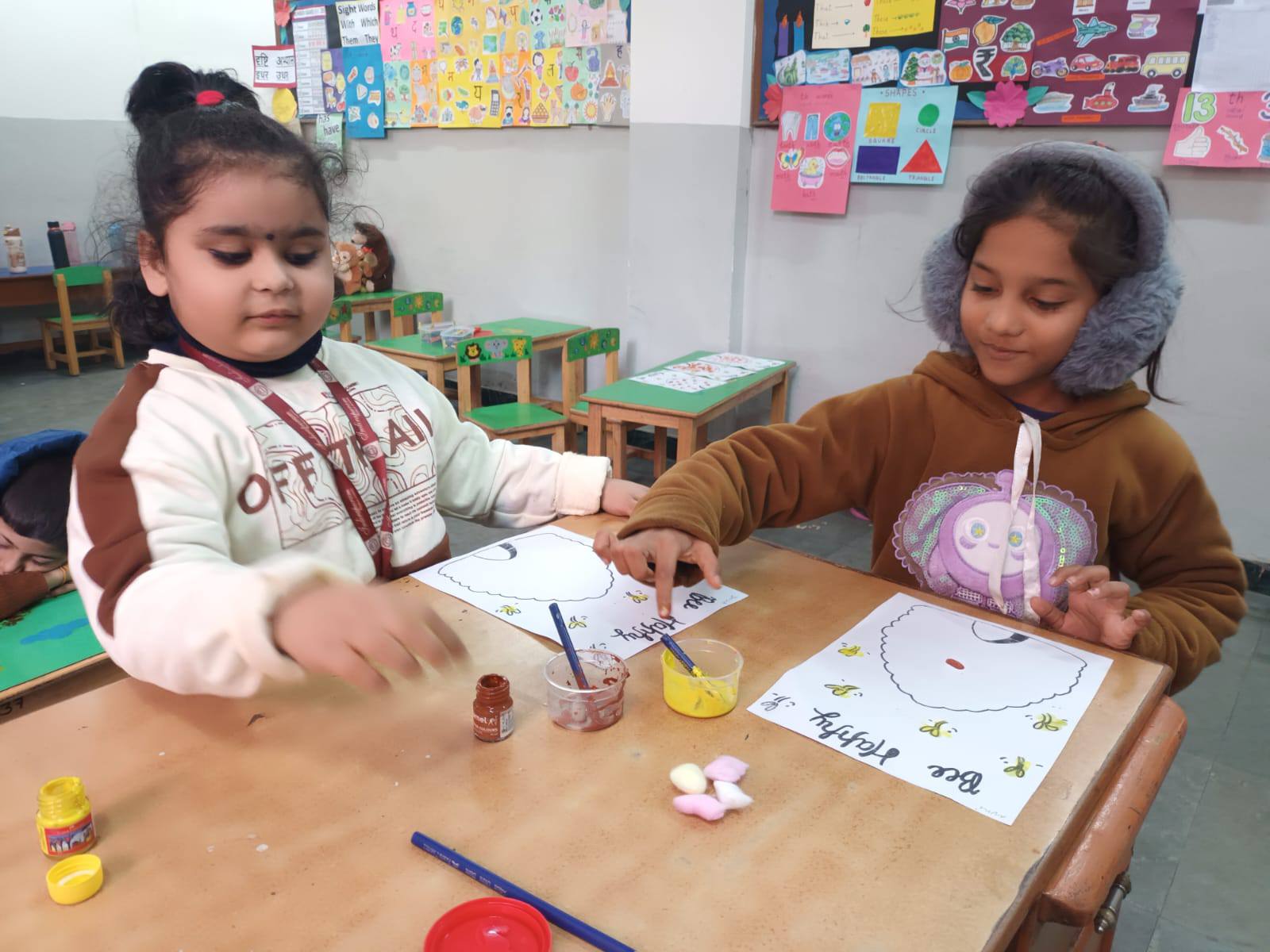
Schools play a vital and an important role in a child’s life. Now, with time, schools have changed their technology and strategies of teaching. Schools have built such plans for students so that they can easily face the today’s era of technology. Through activity-based learning, project work, experiments and classroom discussions, students get opportunities to explore concepts and find solutions independently.
Schools are the only solace to develop a child’s critical thinking through simple changes in everyday teaching. A classroom does not always need complicated activities based learning to make children think. Even a well-framed question can encourage a student to look at a topic differently. When students are given opportunities to discuss, experiment, question and solve problems, learning becomes more interesting and meaningful. The following key points will be helpful for every one that what role schools can play to develop critical thinking:
• Project-Based Learning
• Classroom Discussions
• Experiments
• Problem-Solving Activities
• Debates
• Group Activities
• Inquiry-Based Learning
The Role of Teachers and Parents
Teachers and parents have a huge role to play in developing children's thinking skills. Children are naturally curious, and the questions they ask can become valuable learning opportunities.
Instead of always giving children the answer, adults can ask:
• Why do you think this happened?
• How did you get this answer?
• Can you think of another solution?
• What would happen if we changed something?
• Do you agree? Why?
These simple questions encourage children to explain their thinking rather than simply give a one-word answer. Parents can also encourage critical thinking through everyday conversations. While cooking, shopping, travelling, watching a film or reading a story, they can ask children to make predictions, compare choices or explain their opinions. For example, after watching a news report, parents can ask, “What do you think about this?” or “Do you think the information is completely correct? How can we find out?”
Teachers can follow the same approach in classrooms. Instead of correcting every answer immediately, they can sometimes ask students to reconsider their responses and explain their reasoning. This makes children more involved in the learning process.
Most importantly, children should not be made afraid of giving a wrong answer. Making mistakes is a natural part of learning. If children feel comfortable making mistakes, they are more likely to ask questions, try new things and learn from their experiences. A classroom where students are allowed to ask questions without fear can gradually become a classroom where curiosity and independent thinking grow naturally.
Preparing Students for the Future
Technology has made information easily available. A student can now find an answer within seconds. But finding information is not the same as understanding it. Along with academic knowledge, students need 21st-century skills such as communication, teamwork, decision-making and adaptability.
Students need to know:
Is this information correct?
Can I trust it?
How can I use it?
Is there another point of view?
These questions are becoming increasingly important in the digital age. Students are surrounded by a huge amount of information every day, and not everything they see online is necessarily accurate or reliable.
This is where critical thinking becomes extremely important. It helps students look at information carefully instead of believing something simply because it appears on a screen.
The students of today will work in a world where technology and artificial intelligence will continue to grow. They will need skills such as critical thinking, creativity, communication, teamwork, digital awareness and adaptability. Technology can provide information and perform many tasks, but students still need to decide what to do with that information. They need to ask the right questions, understand problems and make sensible choices. Schools, therefore, have an important responsibility. They should prepare children not only to pass examinations but also to face situations where there may not be a ready-made answer.
As the famous psychologist Carl Rogers believed, meaningful learning happens when learners are actively involved in the process. This is why classrooms should not only be places where teachers give information. They should also be places where students ask, explore, discuss and discover
Conclusion
Rote learning and critical thinking do not have to be treated as complete opposites. Memorising basic facts still has its place in education. The important thing is that students should not stop at memorising. A child should not only know what something is but also understand why it is important and how it can be used. The education of today should therefore help students understand, question, apply and create, rather than simply remember. After all, the real success of education is not when a child can remember every answer in a book. It is when the child can think independently and use learning wisely in real life. In the end, the most valuable education is not about filling a child's mind with as many facts as possible. It is about teaching children how to use what they know, how to question what they do not understand and how to find their own way towards a solution.