



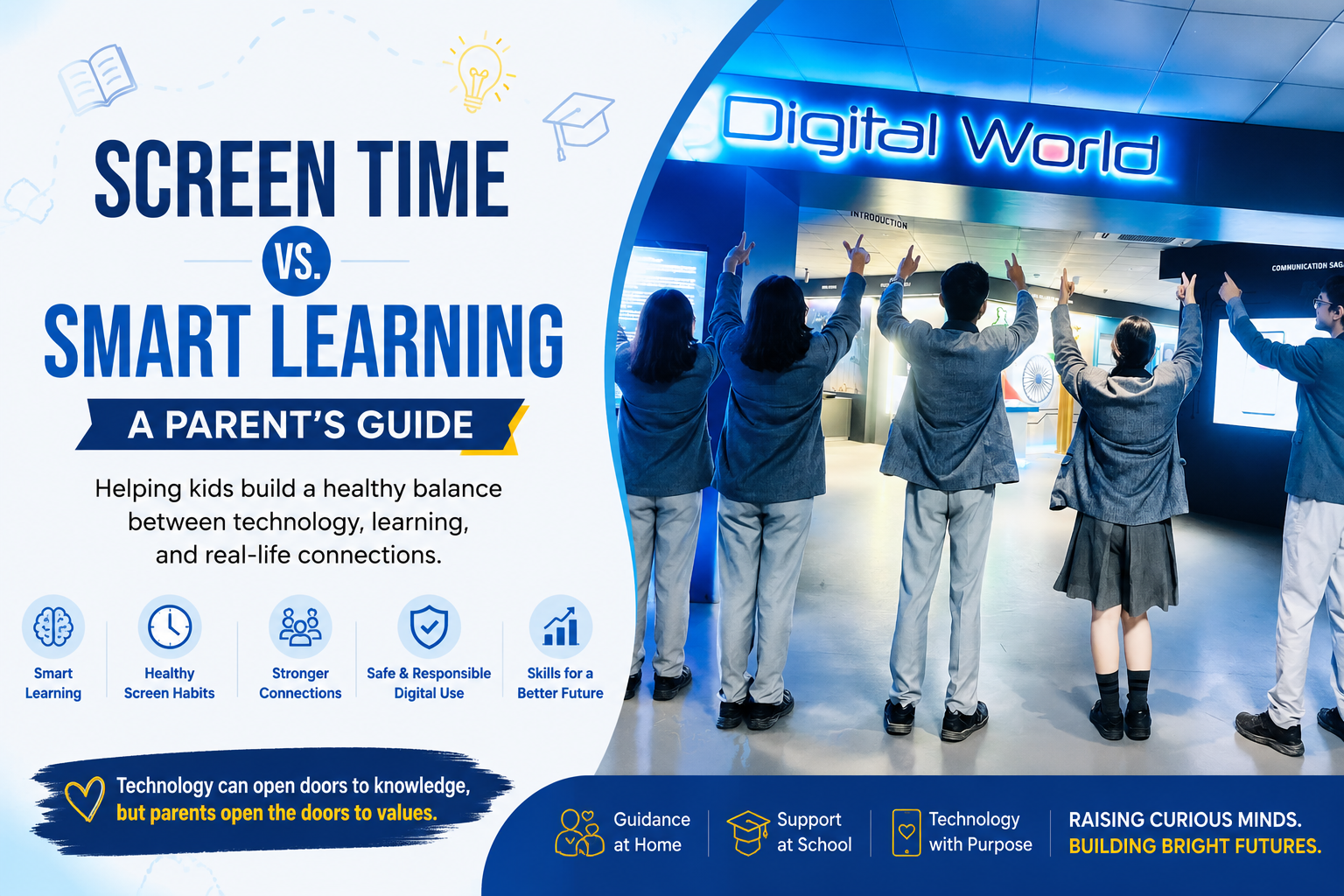
"Technology can open doors to knowledge, but parents open the doors to values."
In today's world, screens are woven into the very fabric of childhood. Whether it’s for school, learning a new hobby, playing games, or staying in touch with friends, children spend a significant portion of their day looking at phones, tablets, laptops, and TVs. This shift has left many parents feeling torn about the role of technology. The real issue isn't the gadgets themselves, but rather how, when, and why they are being used. When managed correctly, screen time can be a powerful tool. Through smart learning and healthy boundaries, it can become a gateway that expands a child's mind and horizons.
Understanding Screen Time
"It is not the screen that shapes a child; it is what happens on the screen that makes the difference."
Today, "screen time" is a broad term used to describe the time spent consuming digital content. However, for modern kids, this goes far beyond just sitting in front of a television. They use various devices to attend live classes, complete schoolwork, watch educational tutorials, play interactive games, and communicate with others. Because technology has become such an inseparable part of daily life, parents need to look beyond the clock and focus on what is actually happening during those hours.
If children are using screens to explore new concepts, the experience can be incredibly enriching. On the other hand, mindless consumption that offers no real substance can be a waste of potential. For parents, the priority should shift from strictly counting minutes to evaluating the quality of the content being consumed. When used intentionally, technology is one of the most valuable tools available for a child's growth and education.
Smart Learning Begins with Smart Choices
"It is not the screen that makes a kid; it is what they do on the screen that matters." Kids are constantly surrounded by digital interfaces, but these screens don't have to be just for entertainment. They are also incredible classrooms. Through specialized apps, videos, and virtual experiments, children can engage with the world in ways previously impossible. When technology is used actively for competency based learning, it encourages critical thinking, curiosity, and problem-solving. However, if usage is purely passive—just endless scrolling or repetitive gaming—it can lead to boredom and a lack of motivation.
What Does Smart Learning Really Mean?
Learning becomes an adventure when kids are genuinely curious and actively engage with the tech they use. Smart learning isn't about rote memorization; it’s about participation. It involves using interactive quizzes, hands-on digital activities, and educational videos to truly grasp a concept. Many modern platforms allow kids to learn at their own pace, meaning they can revisit a difficult topic until they finally "get it." This builds confidence and teaches them that failure is just a step in the learning process.
When children use technology in a smart way, they develop the ability to:
• Unleash their creativity and imagination
• Think critically and tackle complex problems
• Learn how to study independently
• Maintain a natural sense of curiosity
• Build essential skills for the future
• Most importantly, they learn to enjoy the process of discovery rather than dreading schoolwork.
The Benefits of Smart Learning for Children
Used wisely in modern learning approach, technology can make complex subjects much more approachable and engaging than traditional textbooks alone. It provides instant access to a world of resources—animations, interactive games, and diverse perspectives—that reinforce what they are learning. It removes the pressure of "keeping up" by allowing students to move at a speed that suits them. Ultimately, it turns learning into an exciting, active experience rather than a passive chore.
The Risks of Excessive Screen Time Every Parent Should Know
Because technology is so deeply integrated into life, it can easily start to crowd out other essential activities. Too much time spent hunched over a device can lead to physical issues like eye strain, headaches, and poor posture. Perhaps more importantly, excessive screen use can eat into sleep, outdoor play, and meaningful family time. While digital connection is great, it can never replace the importance of face-to-face social interaction for developing healthy relationships.
The goal for parents shouldn't be to ban technology, but to guide its use. By helping kids find a balance between digital life, physical activity, hobbies, and family connection, they can enjoy the perks of the digital age without missing out on the joys of being a kid.
Smart Learning vs. Mindless Screen Time
It is vital to distinguish between productive engagement and wasted time. A child who is practicing coding, reading digital books, or watching science tutorials is using technology to sharpen their mind. Conversely, a child spending hours on aimless, repetitive videos isn't gaining much. Parents don't need to get rid of screens entirely; they just need to encourage their children to use them as tools for creativity and growth.
Creating Healthy Screen-Time Habits at Home
Children thrive on structure. Just as we set routines for mealtime and bedtime, we should help them develop healthy digital habits. By setting clear rules and expectations, we can help them navigate the digital world with intention and balance. Parents can set simple boundaries, such as deciding exactly when screen time starts and ends. Making certain moments—like mealtimes, family discussions, and bedtime—completely tech-free is a great way to stay connected. It is also vital for parents to encourage kids to dive into other hobbies, whether that’s playing outside, reading, playing board games, drawing, or just exploring whatever catches their interest. Whenever possible, parents should try joining in on the fun by watching videos or using the same educational apps their kids enjoy; it turns technology into a shared experience rather than an isolated one.
The Role of Schools in Smart Digital Education
While a good school will teach children how to use technology, a truly great school teaches them *when* to use it. Digital tools are becoming a standard part of modern education, appearing in everything from classroom instruction to specialized learning software. These interactive activities can make learning feel much more engaging. However, exceptional schools go a step further by teaching digital responsibility, online safety, and healthy habits. When parents and schools work as a team, kids are much better equipped to grow and build a healthy relationship with the digital world.
At Indirapuram Public School, Pratap Vihar, technology is used as a learning tool alongside hands-on experiences, academics, sports, arts, and value education. Give your child an environment where digital learning and real-world learning go hand in hand.
Screen-Time Guidelines for Age Groups
Every child is unique, so there is no one-size-fits-all rulebook. Instead, parents can use common-sense guidelines tailored to their child’s age and personality. For younger children, hands-on play and human interaction should always take priority over screens. When they do use devices, the focus should be on educational content and balanced with plenty of outdoor time. As kids get older, the conversation should shift toward using technology wisely and safely. At this stage, building trust and being transparent is often more effective than strict control. Establishing these healthy habits early on sets the foundation for a lifetime of balanced tech use.
Signs of Healthy Digital Learning Habits
It is actually quite easy to spot a child who uses technology in a balanced way. They stay engaged in the things they love, like playing with friends or interacting with family, and they maintain regular sleep and exercise routines. They don't have a meltdown if they can't bring a phone, tablet, or laptop everywhere they go, because they understand that devices are just one small part of their world. Being able to balance digital life with offline activities is the key to long-term digital wellness.
Conclusion
"Smart learning isn't just about giving children access to technology; it’s about parents, teachers, and technology working in harmony to inspire them and spark their imaginations."
Technology has undeniably improved the way children learn, but it can never replace the guidance and support of caring adults. Kids need mentors to help them navigate this new landscape. When children are given the freedom to use technology to ask questions, think critically, and explore new ideas, they can develop incredible skills. Ultimately, it isn't about the number of hours spent in front of a screen, but rather what they are learning and how they are growing as individuals. Technology can open doors to a world of information, but it is parents who open the doors to values.